

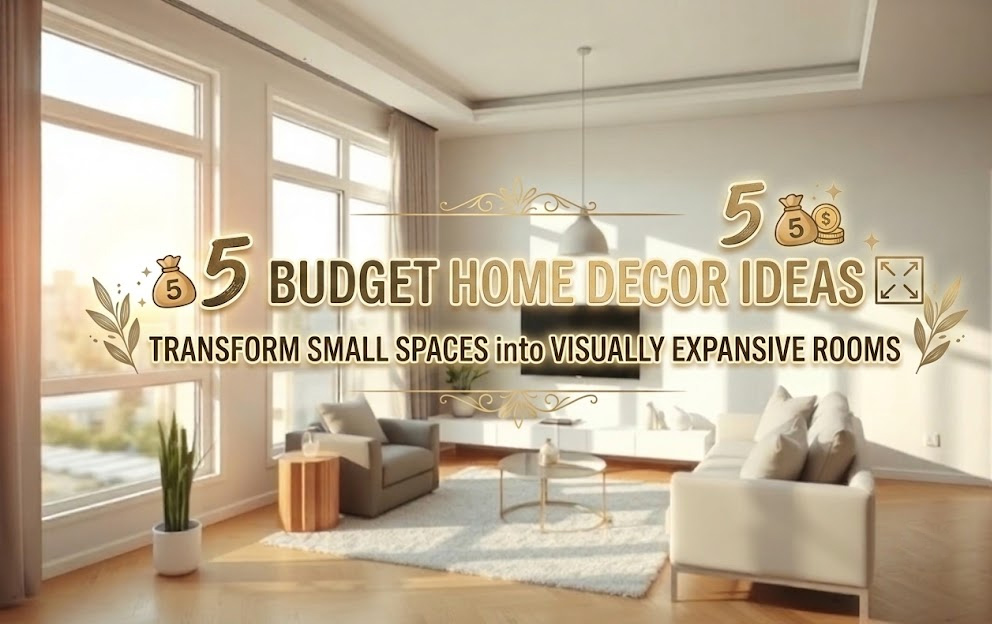
Transforming Small Spaces into Expansive Rooms on a Budget is Now Easier Than Ever
In an era of limited living spaces, especially in major urban areas, whether it’s a condominium, apartment, or compact townhouse, many people may face the challenge of rooms feeling cramped, stuffy, and uninviting. However, this challenge doesn’t mean you need a massive budget to improve your space. In fact, with clever design principles and creativity, you can miraculously transform a narrow room to appear much more spacious, all on a limited budget.
This article will present 5 key ideas proven effective in visually enlarging rooms. These ideas focus on low-cost implementation while yielding significant results in creating a comfortable, airy, and functional living space.
Understanding the Fundamental Principles of Visual Space Expansion
Before diving into each idea, it’s crucial to understand that visually expanding a room isn’t about increasing its physical dimensions. Instead, it involves using design techniques that play with perspective, light, and arrangement to create an illusion of a larger space than it actually is. These principles will help you apply various ideas appropriately to your room’s context.
1. Smart Use of Color and Lighting
Color and light are two of the most powerful elements in setting the mood and defining the perceived size of a room. Correct use of color and lighting can transform a narrow room into one that feels open, airy, and surprisingly spacious.
- Wall and Ceiling Colors Opting for light colors such as white, cream, light grey, or pastel tones helps reflect light effectively, making the room appear bright and airy. Avoid dark colors, which absorb light and instantly make a room feel dense and smaller. If you wish to add dimension, consider a monochromatic scheme—using different shades of the same color—to create depth without shrinking the room.
- Natural Light Maximizing natural light exposure in the room is paramount. Keep curtains or blinds wide open, avoiding heavy drapes or obstructions that block light. Using sheer, light-colored curtains can filter light and maintain privacy without making the room feel dark.
- Artificial Lighting Layered lighting can add depth and dimension to a room. Instead of a single ceiling light, incorporate floor lamps, wall sconces, or cove lighting to distribute light evenly and create focal points. Avoid large, dangling light fixtures, as they can make the ceiling appear lower. Choose warm white or soft white light tones for a comfortable and inviting ambiance.
2. Select Multifunctional and Appropriately Sized Furniture
Choosing furniture that isn’t overly bulky and serves multiple functions will save space and make the room appear more organized.
- Furniture Size It’s essential to select furniture that is proportionate to the room’s dimensions. Overly large furniture will make the room feel cramped and suffocating. Try leaving a small gap between furniture and walls to give the room some breathing space.
- Multifunctional Furniture Invest in furniture that can adapt to different uses, such as sofa beds that convert into sleeping areas, foldable tables that can be stored when not in use, ottomans with hidden storage, or beds with built-in drawers underneath.
- Transparent Furniture Furniture made from transparent materials, like glass tables, acrylic tables, or clear plastic chairs, prevents visual obstruction, making the room appear open and spacious.
- Floating or Wall-Mounted Furniture Utilizing floating shelves or wall-mounted cabinets helps keep the floor clear, creating the illusion of more space.
3. Decluttering and Eliminating Unnecessary Items
A cluttered room filled with too many items will quickly make it feel smaller. The principle of “Less is More” is therefore key to making a room feel spacious and inviting.
- Eliminate Unnecessary Items Start by sorting through and getting rid of items you no longer use or need. Organizing belongings neatly will make the room appear cleaner and create more perceived space.
- Smart Storage Solutions Take advantage of hidden storage spaces, such as under-bed storage boxes, baskets or trays for organizing small items, or built-in vertical shelving. Categorizing items will help you find things easily and maintain order.
- Furniture Arrangement Try to arrange furniture as close to the walls as possible to keep the center of the room open, creating wide walkways. Avoid placing items that obstruct pathways or make the space feel constricted.
4. Maximizing Vertical Space
When horizontal space is limited, utilizing the vertical space of a room becomes crucial for increasing storage and making the room appear taller and airier.
- Wall-Mounted Shelves Install floating shelves on walls to store books, decorative items, or other essentials. Using shelves that extend high up towards the ceiling draws the eye upwards, making the room appear taller and more expansive.
- Tall and Built-in Cabinets Consider using wardrobes or storage cabinets that reach the ceiling to maximize storage space and reduce the need for multiple pieces of furniture. Built-in cabinet designs can make the space look tidier and more integrated.
- Vertical Decor Hanging curtains from the ceiling to the floor helps trick the eye into perceiving higher ceilings, making the room feel more open. Additionally, choosing vertical wall art or arranging multiple pieces vertically can also draw the eye upwards.
5. Creating Focal Points and Using Mirrors to Expand Space
Creating a focal point in a room and strategically using mirrors are powerful techniques to visually enlarge a room and add dimension.
- Create a Focal Point Choose one wall as a focal point and adorn it with a single large piece of art, a distinctive rug, or a specially painted or decorated wall. Having a single point of interest draws the eye and makes the room feel more cohesive and less cluttered.
- Use of Mirrors Mirrors are excellent tools for expanding space. Placing a large mirror opposite a window will reflect natural light and the outdoor view, making the room appear brighter and twice as spacious. If there’s no window, mounting a full-length mirror or several mirrors side-by-side on a wall can create an illusion of deeper space. Be cautious not to place mirrors where they reflect clutter, as this will only make the room look more disorganized.
- Other Reflective Surfaces Besides mirrors, using materials with reflective surfaces, such as glass-top tables, furniture with glossy finishes, or metallic decor, can also help reflect light and enhance brightness, making the room appear larger.
Decorating a small home on a budget to make it appear spacious is not difficult if you are creative and know how to apply appropriate design principles. With the 5 ideas mentioned above, you can transform your limited living space into a comfortable, airy, and functional home without spending a large amount of money. The key is careful planning, organization, and smart choices in decor to bring your dream home to life.
