

Transitioning to a New Era of Home Decoration
Home decoration is more than just aesthetics; it reflects the evolving lifestyles, values, and technologies of each era. As we approach 2026, the world of interior design is undergoing significant transformations, focusing on sustainability, smart technology, and a profound connection to nature. This article will explore the key trends anticipated to shape residential interiors in 2026, providing insights for those interested in preparing and applying these concepts to create their personal spaces.
Sustainable and Eco-Friendly Design
One of the strongest and most enduring movements in home decoration for 2026 will be sustainability. The choice of materials and design methods that consider environmental impact will become a standard, not merely an alternative.
Natural and Recycled Materials
- Certified Wood The use of wood from sustainably managed forests or recycled wood will continue to be popular.
- Plant-Based Materials Such as bamboo, rattan, hemp, or other plant fiber materials, will be increasingly utilized in furniture and decorative items.
- Recycled Concrete and Metals Reusing these materials not only reduces waste but also provides a raw, cool, and modern aesthetic.
- Non-Toxic Paints and Finishes Growing concerns about household chemicals will drive the selection of safer, healthier paints and materials.
Energy Efficiency and Green Technology
Designs that minimize energy consumption will be paramount. This includes incorporating large windows for natural light, installing efficient insulation, and opting for energy-saving appliances. Additionally, rainwater harvesting systems and water recycling will become integral parts of sustainable design.
Smart Technology and Connectivity
Smart homes will transcend mere convenience devices to become an seamlessly integrated part of daily life.
Smart Homes for Convenience
- Voice Control and AI Will intelligently and automatically manage everything from lighting and temperature to household appliances.
- Seamless Wireless Connectivity Devices will work together harmoniously, creating a home ecosystem that precisely responds to user needs.
- Intelligent Security Smart cameras, sensors, and door locks controlled via smartphones will provide peace of mind and enhance safety for residents.
Adaptive Lighting and Climate Control
Smart lighting systems capable of adjusting light intensity, color, and temperature according to the time of day or activity will promote better health and mood. Similarly, climate control systems will learn behaviors and automatically adjust temperatures for optimal comfort.
Bringing Nature Indoors | Biophilic Design
The design concept that connects residents with nature will continue to be popular, as it helps create a calm, relaxing, and mentally healthy environment.
Indoor Plants and Vertical Gardens
- Large Indoor Gardens Whether large potted plants or vertical wall gardens, these additions will enhance freshness and purify the air.
- Green Walls and Roofs Incorporating plants onto walls or roofs will help reduce indoor temperatures and create a sense of closeness to nature.
Natural Light and Views
Designs that maximize natural light penetration into the home, along with strategically placed windows offering outdoor views, will help reduce stress and foster a sense of relaxation.
Multi-functional and Adaptable Spaces
With limited living spaces in urban areas, designs that can adapt to multiple functions will become essential.
Versatile Furniture
- Modular Furniture That can be reconfigured or combine multiple functions into one piece, such as murphy beds, adjustable tables, or shelving units with hidden drawers.
- Clever Storage Solutions Designs emphasizing the optimal use of every square inch, like built-ins under stairs or walls with secret compartments.
Flexible Space Division
The use of movable partitions, sliding doors, or curtains to divide spaces, allowing them to be reconfigured based on activities and needs, will greatly enhance the flexibility of home usage.
Personalization and Well-being
Homes in 2026 will be more than just dwellings; they will be spaces that genuinely promote the physical and mental well-being of their inhabitants.
Creating Reflective Personal Spaces
Designs that allow homeowners to fully express their personality and taste, through the selection of decor, artwork, or even the arrangement of private corners for relaxation or hobbies, will be crucial in making a home more meaningful and livable.
Mental and Physical Well-being at Home
- Relaxation and Meditation Nooks Creating small corners for meditation, reading, or relaxation will help reduce stress.
- Smart Air Purification Systems To ensure indoor air is clean and healthy.
- Lighting that Promotes Circadian Rhythms Lighting that adjusts to the body’s natural cycle will help improve sleep and promote refreshed awakenings.
Colors and Textures
Color palettes and textures will play a significant role in creating atmosphere and feeling within the home.
Natural and Calming Palettes
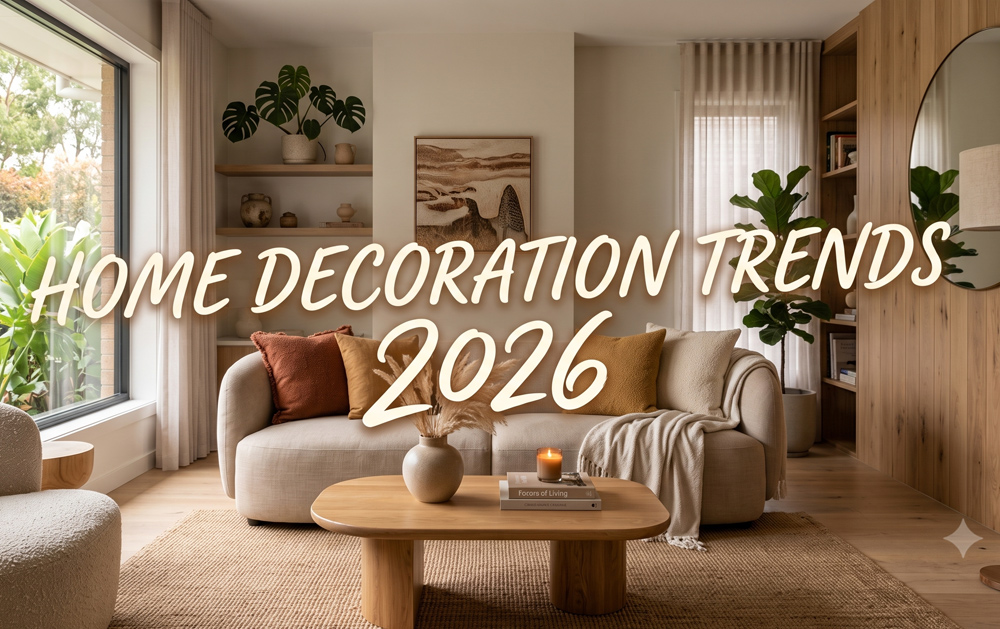
Earth tones such as beige, light brown, olive green, and soft blues will remain popular, as they evoke a sense of calm, relaxation, and connection to nature. These colors can serve as a base for decoration, with small pops of brighter hues added to create focal points.
Diverse Tactile Surfaces
The combination of materials with varying textures, such as raw wood, soft leather, linen, terrazzo, or patterned tiles, will add dimension and interest to spaces, making homes feel warmer and more vibrant.
Conclusion
Home decoration trends in 2026 reflect humanity’s desire to live in harmony with nature, alongside leveraging technology for convenience and improved quality of life. Design will focus on sustainability, flexibility, adaptability, and most importantly, creating spaces that promote overall physical and mental well-being. Understanding these trends will enable us to create homes that are beautiful, highly functional, and truly eco-friendly.
