

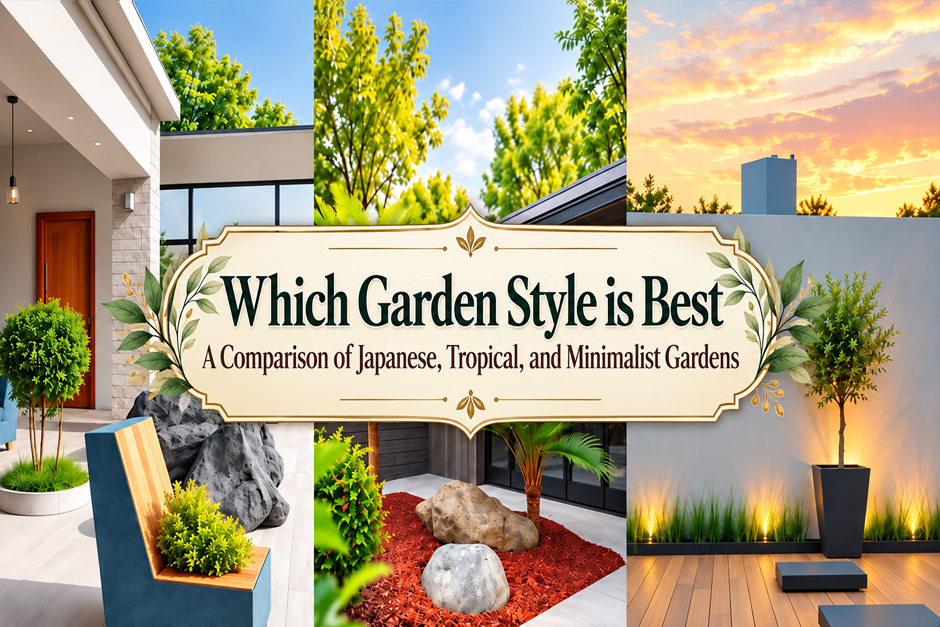
Which Garden Style is Best A Comparison of Japanese, Tropical, and Minimalist Gardens
Having a green space at home, whether a small or large garden, significantly enhances freshness, relaxation, and vitality for residents. However, when it comes to designing a garden, many might wonder which garden style is best to suit their preferences, lifestyle, and available space. This article will guide you through exploring and comparing Japanese, Tropical, and Minimalist gardens—three popular styles—to help you decide and design your dream garden more easily.
Japanese Garden A Garden of Serenity and Philosophy
The Japanese garden is a globally popular landscaping style, known for its emphasis on tranquility, balance, and recreating nature within a confined space. This style often embodies deep philosophy and aesthetics.
Key Characteristics and Elements of a Japanese Garden
- Balance and Serenity Japanese gardens are typically designed to evoke a sense of relaxation and serve as a spiritual retreat.
- Rocks and Sand Rocks are primary elements, representing mountains or islands. Sand or gravel, raked into patterns, mimics water surfaces or waves.
- Water Ponds, streams, or small waterfalls symbolize life and flow.
- Plant Life Focuses on evergreen plants such as pines, bamboo, maples, moss, and ferns, meticulously pruned.
- Complementary Elements Stone lanterns, wooden or stone bridges, small pavilions, and bamboo fences.
Types of Japanese Gardens
- Dry Landscape Garden (Karesansui) or Zen Garden primarily uses rocks and gravel to represent mountains and water, conveying emptiness and meditation.
- Tea Garden (Chaniwa) A garden surrounding a teahouse, emphasizing simplicity and a path leading to tranquility.
- Stroll Garden (Kaiyu-shiki Teien) A larger garden with pathways designed for exploring changing vistas at different points.
Pros and Considerations
- Pros Creates a serene, relaxing atmosphere with profound beauty, suitable for those seeking a space for meditation.
- Considerations Designing requires an understanding of Japanese garden philosophy and art. Maintenance is meticulous, especially pruning trees and caring for moss.
Tropical Garden A Garden of Lushness and Vibrancy
The Tropical garden, or tropical rainforest garden, is a style inspired by the lush, vibrant, and refreshing natural environments of tropical regions. It emphasizes abundant, green plant life and a lively atmosphere.
Key Characteristics and Elements of a Tropical Garden
- Large-leafed Plants Features large-foliaged plants like bananas, palms, heliconias, ferns, taro, and brightly colored flowering plants.
- Plant Diversity Plants are arranged at various heights to create layers and density, resembling a natural forest.
- Water Features Often includes ponds, waterfalls, or fountains to increase humidity and create a refreshing ambiance.
- Natural Materials Uses wood, stone, or other natural-feeling materials for decoration.
- Light and Shadow Strategic placement of plants to create shade and play with light filtering through leaves.
Pros and Considerations
- Pros Provides a fresh, shady, and vibrant feel, well-suited to tropical climates. Offers good privacy.
- Considerations Requires a relatively large space. Watering and pest control may be frequent, as tropical plants need high humidity.
Minimalist Garden A Garden of Simplicity and Modernity
The Minimalist garden is a style emphasizing simplicity, cleanliness, and functionality. It strips away unnecessary elements to reveal the essence of beauty and tranquility, following the
